Buyer Agent in Provence — Mas, Villages and Vineyard Property Representation
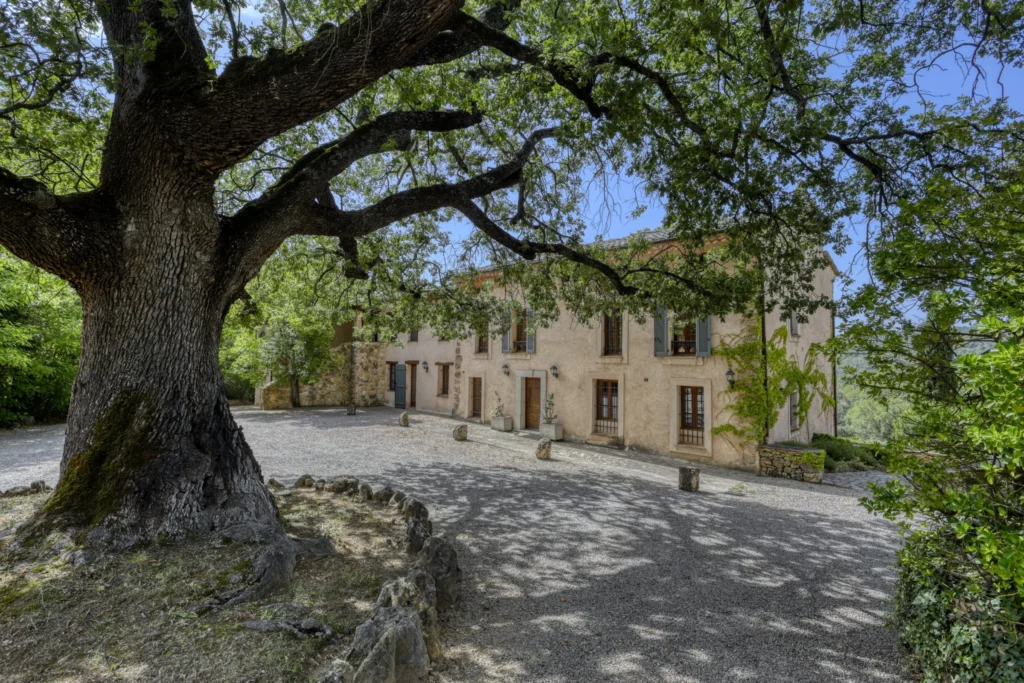
Provence may be the most photographed property market in France, and the most misunderstood. The images are accurate: the stone mas among the vines, the shuttered village house on a fountain square, the lavender to the horizon. What the images omit is that this is a market of microclimates in every sense — where two farmhouses ten minutes apart differ by half a million euros, where the view that sold you the house may be one planning decision from disappearing, and where the best properties trade through notaires and word-of-mouth before any portal hears of them.
International buyers succeed here constantly — but the ones who succeed on the first attempt, rather than the third summer, almost all arrived represented.
The Market — Three Provences, Three Price Realities
“Provence prices” is like the weather of a continent. The golden triangle — the Luberon villages of Gordes, Ménerbes and Bonnieux, and the Alpilles around Saint-Rémy — trades at a premium rivaling fashionable coastal markets, with restored mas commanding several million euros. Aix-en-Provence forms the second tier, a genuine year-round city market with city liquidity. Then comes the vast third Provence — the Var interior, the Haut-Vaucluse, the villages beyond the famous names — where authentic stone properties with land still change hands for the price of a modest Paris two-bedroom.
The pattern worth understanding before any visit: in Provence you are not paying for square meters or even for stone — you are paying for a postcode’s place in a forty-year international imagination. One valley beyond the imagination, the same architecture costs half as much.
What You Are Actually Buying — The Mas, the Village House, the Vines
Each Provençal property type carries its own due-diligence personality. The mas is the dream and the biggest file: water supply and rights (a borehole is an asset; a shared spring is a negotiation), the true condition of roofs and stone behind recent render, septic compliance, and boundaries of land farmed informally for generations. The village house is simpler but denser: party walls, ancient servitudes, and the summer acoustics of a square that photographed as charming in October.
Vineyard property adds the agricultural layer: SAFER, the rural land agency, holds rights over farmland transactions, and vines arrive with appellation rules, farming contracts, and sometimes a tenant whose rights outrank the buyer’s plans. None of this is reason to hesitate — it is the ordinary machinery of rural France, and understanding what the notaire does and does not do for you explains why a buyer’s own representative reads these files before an offer, not after.
The Rhythm of the Market — and Why Timing Beats Searching
Provence trades seasonally in a way city markets do not. The visible market peaks in spring and early summer, and prices and competition peak alongside. The serious market moves in the shoulder seasons — the September-to-November window when summer’s unsold properties meet motivated owners, and the late-winter weeks when estates come to market quietly ahead of the season. Buyers who view in February, when a mas is judged on its bones and heating bills rather than its bougainvillea, consistently buy better.
Access matters as much as timing. A meaningful share of the region’s finest properties — particularly inherited estates and long-term foreign owners’ discreet sales — never reach public listing, moving instead through local notaires and a few trusted intermediaries. The same off-market dynamics we work along the coast through our buyer agent coverage in Nice and the Riviera operate inland, one hour from the sea, with even less publicity.
Financing a Provence Purchase as an International Buyer
French banks lend against Provençal property on the national pattern — fixed rates for the full term, non-residents welcome with the right file — but rural property bends the arithmetic: banks value the habitable buildings conservatively and count the hectares and the olive grove at little, so loan-to-value on a €2 million estate differs sharply from the city equivalent. Renovation budgets can often be financed within the original loan when quotes are gathered early — rewarding the disciplined sequence: qualification first, dream second. Our guide to financing property anywhere in France explains how to structure that file before the search begins.
How SHOKO’s Network Operates in Provence
Our English-speaking buyer agents across Provence work the market the way it actually functions: through the notaires’ quiet portfolios, the village networks where a discreet sale is mentioned at the boulangerie before anywhere else, and the specialist channels for vineyard and heritage property. Their role runs from calibrating the search across the three Provences to commissioning the surveys that matter here — water, roofs, septic, boundaries — to managing SAFER timelines and negotiating with owners for whom the mas is family memory with a price attached.
Finding property in France is not like finding property anywhere else — and understanding why changes everything about how you search.
France has no MLS system, and that is not an oversight. It is a reflection of how French sellers think about their property. The default preference is to sell quietly, privately, and selectively — to a buyer who has been introduced, vetted, and approved before a single viewing takes place. The properties that eventually appear on public portals are, in most cases, the ones that did not sell this way first. By the time a listing is visible online, it has already been seen — and passed on — by the most motivated buyers in the market.
This means that the agent holding a listing in France is working for one purpose: to sell that specific property to a buyer they have qualified. They are not searching the market for you. They are not comparing their listing to others. They are not asking whether this property is the right fit for your life and your budget. Their job ends when their listing sells.
A buyer agent works entirely differently. Their mandate is to search the entire market on your behalf — every agency, every private listing, and most importantly, the properties that never appear publicly at all. Off-market is not a niche in France. It is where the best properties move, quietly, between people who know the right people.
The English-speaking buyer agents in our network have been selected specifically because they work this way — with full market access, genuine local knowledge, and the relationships that open doors that are closed to everyone else. They know which properties are available before they are listed, which sellers are genuinely motivated, and how to move quickly when the right property appears.
And critically: this costs you nothing above what you would pay with any standard agent. Our referral fee is paid by the agent from their own commission. Your purchase costs are identical. What changes is that instead of spending months calling agencies, viewing properties that do not fit, and negotiating without the knowledge of what comparable properties have actually sold for — you arrive with a specialist already working for you, with access to the full market from day one.
If you are serious about buying in Provence and want to stop losing time to a system that was not designed with buyers in mind, Contact SHOKO and we will introduce you to the right person.
Recommended Reads
Buyer Agent in the Loire Valley — Château and Country Property Representation — buypropertyfrance.com
Buyer Agent in Biarritz — Atlantic Coast Property Representation for International Buyers — buypropertyfrance.com
Living in France Guide: The Best Places to Live for Expats and International Buyers — homefrance.eu
5 Things to Know Before Buying Property Outside Paris — buyeragentfrance.com