
The Document That Commits Both Parties
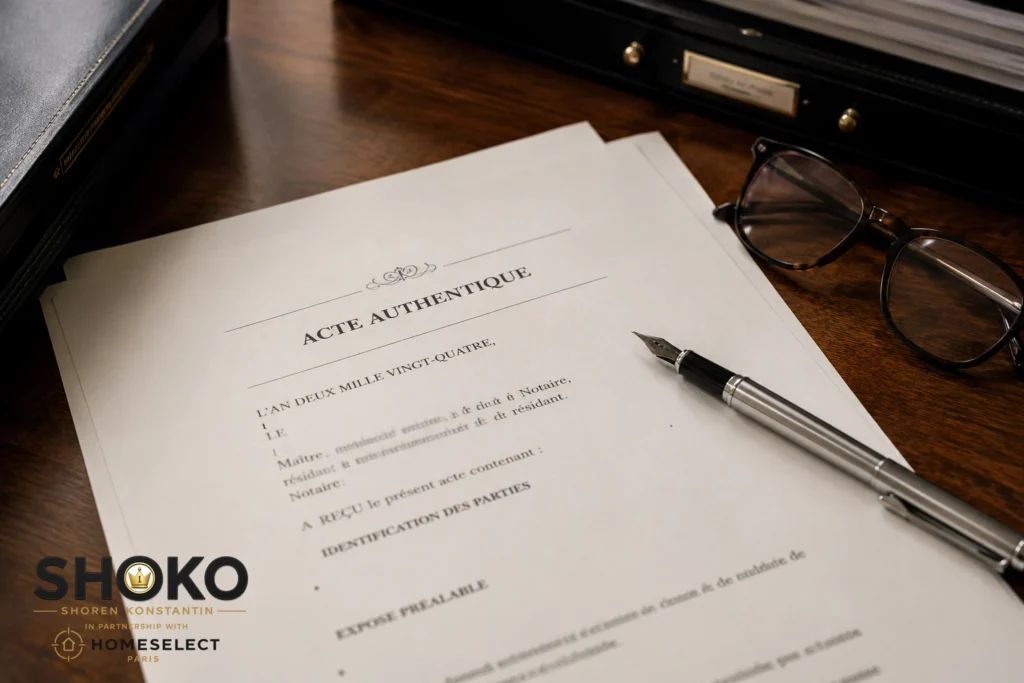
In the French property buying process, the compromis de vente occupies a position unlike any equivalent document in the English-speaking world. It is not a letter of intent. It is not an offer subject to contract. Once signed by both buyer and seller, the compromis de vente creates a binding legal obligation on both parties — and understanding exactly what that means before you reach the signing stage is essential for any international buyer navigating the French system for the first time.
The term translates roughly as a preliminary sale agreement, but that translation understates its significance. In practice, the compromis is the moment the sale becomes real. Everything that follows — the notarial checks, the mortgage finalisation if applicable, the transfer of funds — is the execution of what was agreed at that point.
What the Compromis de Vente Actually Contains
The compromis de vente is a comprehensive document, typically drafted by either the notaire or the estate agent, that sets out the full terms of the transaction. It includes the agreed purchase price, the property description and exact cadastral references, the list of any fixtures and fittings included in the sale, any conditions precedent (known as conditions suspensives) that must be met for the sale to proceed, the proposed completion date, and the deposit amount — typically 10% of the purchase price — that the buyer pays at signing.
It also incorporates a series of mandatory diagnostic reports covering the property’s condition: lead, asbestos, electrical installations, gas systems, energy performance, natural risk exposure, and several others depending on the property type and location. These reports are provided by the seller and must be attached to the compromis. Reading them — or having them explained — before signing is not optional procedure. It is how you understand what you are buying.
The Ten-Day Cooling-Off Period for Buyers
French law provides individual buyers — as opposed to corporate buyers — with a ten-day cooling-off period following receipt of the signed compromis de vente. During this window, the buyer may withdraw from the transaction without penalty and recover any deposit paid. The seller does not benefit from an equivalent right of withdrawal.
The ten-day period begins the day after the buyer receives the compromis by registered post or through a notaire, not from the date of signing. This distinction matters practically: if the compromis is signed in person at an agency, the cooling-off period starts when the registered copy is received, not when the pen leaves the paper.
This protection exists for individual buyers and is a meaningful safeguard during a complex process. It is the period during which you should complete any final due diligence — consulting your independent legal advisor, verifying the diagnostic reports, confirming your financing position, and ensuring that the conditions suspensives are correctly drafted to protect your interests.
Conditions Suspensives — What They Are and Why They Matter
Conditions suspensives are the contingency clauses built into the compromis de vente. They specify conditions that must be satisfied for the sale to proceed. If a condition is not met within the agreed timeframe, the buyer may withdraw without penalty and the deposit is returned.
The most common condition suspensive for international buyers is the mortgage clause (clause suspensive de prêt), which provides protection if financing falls through. This clause must be carefully drafted — it should specify the loan amount, the maximum interest rate, and the timeframe within which the buyer must obtain a formal mortgage offer. If the clause is too loosely worded, it may not provide the protection it appears to offer.
Other conditions suspensives may include the absence of a right of pre-emption being exercised by the local municipality (known as the droit de préemption urbain), the resolution of any outstanding planning or legal issues affecting the property, or specific repair conditions agreed between the parties. Each of these clauses should be reviewed carefully — ideally by an advisor who understands both what is standard and what specific protections your circumstances require.
The Deposit and What Happens to It
The deposit — typically 10% of the purchase price — is paid by the buyer at the time of signing the compromis. It is held in escrow, usually by the notaire, and is not released to the seller until completion. This protects the buyer in situations where the sale does not proceed due to a failed condition suspensive: if the mortgage clause is triggered, for example, the deposit is returned in full.
If the buyer withdraws outside of the conditions suspensives and outside the ten-day cooling-off period — simply changing their mind — the seller is entitled to retain the deposit. If the seller withdraws and the buyer wishes to proceed, the buyer is entitled to the deposit back doubled. This symmetry of obligation is fundamental to understanding the commitment that signing the compromis represents.
Who Drafts the Compromis and What That Means
In France, the compromis de vente can be drafted by either the notaire managing the transaction or by the estate agent (agent immobilier) involved in the sale. This distinction carries implications that international buyers sometimes overlook. An estate agent drafting the compromis is acting in a transaction where they represent the seller’s interests structurally — their commission depends on the sale completing. A notaire, as an officer of the law, has obligations of impartiality, but in practice the notaire appointed is often the seller’s notaire.
International buyers have the right to appoint their own notaire to participate in the transaction. Both notaires work from the same document and share the notarial fees — there is no additional cost to the buyer for having their own notaire. This is a right that informed buyers frequently exercise, and one that provides an additional layer of independent review of the documents before signing.
The Timeline Between Compromis and Acte de Vente
Once the compromis is signed, the period between that moment and the final deed of sale (acte authentique de vente) is typically two to three months. This period is used by the notaire to complete the legal due diligence — title searches, municipal pre-emption checks, mortgage documentation if applicable, and the preparation of the final deed. The buyer uses this period to finalise financing, arrange insurance, and prepare for the physical transfer of the property.
The completion itself takes place at the notaire’s office. Both parties sign the acte authentique, the balance of the purchase price is transferred, and the keys are handed over. From that moment, the buyer is the registered owner of the property.
What International Buyers Most Often Misunderstand
The most common point of confusion for international buyers is the degree of commitment that signing the compromis represents. In the British system, exchange of contracts marks the legally binding moment — but verbal offers and early signed documents carry less legal weight. In the American system, the purchase contract is significant but contingencies provide extensive flexibility. Neither of these frameworks prepares buyers for the French compromis, which binds both parties firmly and with limited exit routes once the cooling-off period has passed.
A second frequent misunderstanding concerns the role of the estate agent. In France, estate agents act for the seller. The commission structure, the advisory relationship, and the information shared all flow from that alignment. Understanding this dynamic before reaching the compromis stage — rather than after — changes the approach a buyer takes to the entire process.
If you are preparing to buy property in France and want to understand the process before committing to anything, Contact SHOKO to discuss how independent guidance supports international buyers through each stage.
Recommended Reads
1. What Is a Notaire in France — Foreign Buyer Guide — buypropertyfrance.com
2. The Real Cost of Buying Property in France — buypropertyfrance.com
3. The French Property Buying Process Explained — buyeragentfrance.com
4. The Biggest Risks International Buyers Face When Purchasing Property in France — buyeragentfrance.com